miércoles, 13 de febrero de 2013

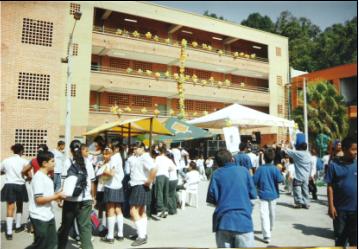
¿como se viven en el colegio los derechos humanos?
¿live as human rights in school?
Here we discuss the issue of the rights and responsibilities that we must fulfill in school where suddenly commit some injustices but also the human side many minor faults are forgiven, and severe in the best sense of the word compliance institutional and helping everyone learn to have a peaceful coexistence, we spend a pleasant life in the hours of schooling which we live and to be people of quality, projecting to the community, the social environment.
¿como se viven los derechos humanos en el colegio?
Aquí queremos tratar el tema de los derechos y deberes que debemos cumplir en el colegio lugar donde de pronto se cometen algunas injusticas pero también en la parte humana se perdonan muchas faltas leves, y graves en el buen sentido de la palabra en cumplimiento de las normas institucionales y ayudando a que todos aprendamos a tener una convivencia pacífica, que pasemos una vida agradable en las horas de escolaridad que vivimos y que seamos personas de calidad, proyectándose a la comunidad, al entorno social.
martes, 12 de febrero de 2013
derecho a la igualdad
This law enabled the French Revolution, along with fraternity and freedom, inspired by the Constitutionalists and enlightened humanists. However, as the authors expose Kenjy Yoshino in his article "The Pressure to Cover" and Ariel E. Dulitzky in his paper, "A region in Deniel: Racial Discrimination and Racism in Latin America ', minorities are still victims of rejections. Furthermore, Dulitzky shows how racism has been ignored in Latin America has been a constant denial either literal (no racism), interpretive (not racism but other factors) or justified (justification does not exist or that victims are not victims of racism).
Is the search for contemporary constitutions mechanisms so that you can "give all citizens the same rights and guarantees" (Right to equality, Rodriguez, Cesar A. pg 195). In a social state of law, such as Colombia, this search is performed through the protection of formal and substantive equality of citizens. Formal equality is understood as equality before the law and material equality, and the different economic and social regulations to be carried out, for there to be equality as such in reality, that is, in social practices.
Some examples of inequality whose source is oppression are exploitation, marginalization, powerlessness to participate and have a say in decisions that affect the public and private life, stereotypes towards disadvantaged groups, physical violence against these groups etc ... creating inequality in economic and social development. Taken to promote material equality are:
dereho a la iguldad
Éste derecho hizo posible la Revolución Francesa, junto con la fraternidad y la libertad, inspirada en los constitucionalistas y humanistas ilustrados. Sin embargo, como lo exponen los autores Kenjy Yoshino en su artículo «The Pressure to Cover» y Ariel E. Dulitzky en su ponencia, «A region in Deniel: Racial Discrimination and Racism in Latin America», las minorías siguen siendo víctimas de rechazos. Por otro lado, Dulitzky muestra como el racismo ha sido ignorado en América Latina que ha existido una constante negación ya sea, literal (no existe racismo), interpretativo (No es racismo sino otros factores) o justificado (justificando que no existe o que las víctimas no son víctimas del racismo).
Es la búsqueda de las constituciones contemporáneas de mecanismos por lo que se le pueda «otorgar a todos los ciudadanos los mismos derechos y garantías» (Derecho a la igualdad, Rodríguez, Cesar A. pg 195). En un estado social de derecho, como el colombiano, esta búsqueda se lleva a cabo por medio de la protección de la igualdad formal y material de los ciudadanos. Se entiende igualdad formal, como igualdad ante la ley e igualdad material, como las diferentes regulaciones económicas y sociales que se deben llevar a cabo, para que se dé la igualdad como tal en la realidad, es decir, en las prácticas sociales.
Algunos ejemplos de desigualdad cuya fuente es la opresión son la explotación, marginación, carencia de poder para participar y tener voz en las decisiones que afectan la vida pública y privada, estereotipos hacia grupos desaventajados, violencia física contra estos grupos etc... creando así desigualdad a nivel económico y social. Adoptadas para promover la igualdad material son:
derecho a la libre expresion
right to freedom of expression
"Freedom of opinion" redirects here. For the right to think freely, see intellectual freedom.
Freedom of expression is a fundamental right or a human right, stated in Article 19 of the Universal Declaration of Human Rights of 1948, and the constitutions of democratic systems, so they say. From it comes the freedom of the press also called press freedom.
The right to freedom of expression is defined as a medium for the free dissemination of ideas, and it was conceived during the Enlightenment. For philosophers like Pach, Montesquieu, Voltaire and Rousseau the possibility of dissent encourages the advancement of the arts and sciences and genuine political participation. He was one of the pillars of the War of Independence of the United States (First Amendment) and the French Revolution, events that stirred the courts of the other western states.

"Freedom of opinion" redirects here. For the right to think freely, see intellectual freedom.
Freedom of expression is a fundamental right or a human right, stated in Article 19 of the Universal Declaration of Human Rights of 1948, and the constitutions of democratic systems, so they say. From it comes the freedom of the press also called press freedom.
The right to freedom of expression is defined as a medium for the free dissemination of ideas, and it was conceived during the Enlightenment. For philosophers like Pach, Montesquieu, Voltaire and Rousseau the possibility of dissent encourages the advancement of the arts and sciences and genuine political participation. He was one of the pillars of the War of Independence of the United States (First Amendment) and the French Revolution, events that stirred the courts of the other western states.
derecho a la libre expresion
La libertad de expresión es un derecho fundamental o un derecho humano, señalado en el artículo 19º de la Declaración Universal de los Derechos Humanos de 1948, y lasconstituciones de los sistemas democráticos, también lo señalan. De ella deriva la libertad de imprenta también llamada libertad de prensa.
El derecho a la libertad de expresión es definido como un medio para la libre difusión de las ideas, y así fue concebido durante la Ilustración. Para filósofos como Pach,Montesquieu, Voltaire y Rousseau la posibilidad del disenso fomenta el avance de las artes y las ciencias y la auténtica participación política. Fue uno de los pilares de la Guerra de la Independencia de los Estados Unidos (Primera Enmienda) y la Revolución francesa, hechos que revolvieron las cortes de los demás estados occidentales.
derecho a la educacion
right to eduation
The right to education first Special Rapporteur of the United Nations Organization on the right to education, Katarina Tomasevski, speaks of four dimensions of this right. The scheme of 4-A (available, accessible, acceptable, adaptable) the right to education provides a conceptual framework for securing the obligations of governments on the right to education: creating education available, accessible, acceptable and adaptable figure also General Comment No. 13 of the Committee on Economic, Social and Cultural Rights. Always realistic, adds Tomasevski "fifth A" (afordable): realizable, because it recognizes that "No government can be legally obliged to do the impossible [1]
The framework provides not only a set of key indicators for the management of education, but also a monitoring scheme under the Human Rights Council of the United Nations.
The right to education first Special Rapporteur of the United Nations Organization on the right to education, Katarina Tomasevski, speaks of four dimensions of this right. The scheme of 4-A (available, accessible, acceptable, adaptable) the right to education provides a conceptual framework for securing the obligations of governments on the right to education: creating education available, accessible, acceptable and adaptable figure also General Comment No. 13 of the Committee on Economic, Social and Cultural Rights. Always realistic, adds Tomasevski "fifth A" (afordable): realizable, because it recognizes that "No government can be legally obliged to do the impossible [1]
The framework provides not only a set of key indicators for the management of education, but also a monitoring scheme under the Human Rights Council of the United Nations.
derecho a la educacion
El derecho a la educación primera Relatora Especial de la Organizacion de las Naciones Unidas sobre el derecho a la educación, Katarina Tomasevski, habla de cuatro dimensiones de este derecho. El esquema de 4-A (available, accesible, acceptable, adaptable) del derecho a la educación brinda un marco conceptual para fijar las obligaciones de los gobiernos sobre el derecho a la educación: generar educación disponible, accesible, aceptable, y adaptable figura igualmente en la Observación general número 13 del Comité de Derechos Económicos, Sociales y Culturales de Naciones Unidas. Siempre realista,Tomasevski agrega "una quinta A" (afordable): realizable, porque reconoce que "Ningún gobierno puede ser obligado legalmente a hacer lo imposible [1]
El marco conceptual brinda no sólo un conjunto de indicadores claves para la gestión de la educación, sino también un esquema de monitoreo en el marco del Consejo de Derechos Humanos de las Naciones Unidas.

El derecho a la educación primera Relatora Especial de la Organizacion de las Naciones Unidas sobre el derecho a la educación, Katarina Tomasevski, habla de cuatro dimensiones de este derecho. El esquema de 4-A (available, accesible, acceptable, adaptable) del derecho a la educación brinda un marco conceptual para fijar las obligaciones de los gobiernos sobre el derecho a la educación: generar educación disponible, accesible, aceptable, y adaptable figura igualmente en la Observación general número 13 del Comité de Derechos Económicos, Sociales y Culturales de Naciones Unidas. Siempre realista,Tomasevski agrega "una quinta A" (afordable): realizable, porque reconoce que "Ningún gobierno puede ser obligado legalmente a hacer lo imposible [1]
El marco conceptual brinda no sólo un conjunto de indicadores claves para la gestión de la educación, sino también un esquema de monitoreo en el marco del Consejo de Derechos Humanos de las Naciones Unidas.
derecho a la vida
l right to life
The right to life is the one with any human being by simply existing and being alive, is considered a fundamental human right. Other people also demand the right to life for the animals that do not belong to the human species, are called animal rights advocates.
Life is the most important right for humans. Life has several factors in human life bodily and psychic forms, the social life of the people through which they perform together works and life of nature that relates to human beings with other living species. So when this right is regulated are taken into account these three aspects of life that are divided but taken as a whole when being regulated, ie the proper performance of these three points in what represents respect for this right that human beings do not only survive (which has vital functions, but live fully, to suggest an integrity).
derecho la vida

The right to life is the one with any human being by simply existing and being alive, is considered a fundamental human right. Other people also demand the right to life for the animals that do not belong to the human species, are called animal rights advocates.
Life is the most important right for humans. Life has several factors in human life bodily and psychic forms, the social life of the people through which they perform together works and life of nature that relates to human beings with other living species. So when this right is regulated are taken into account these three aspects of life that are divided but taken as a whole when being regulated, ie the proper performance of these three points in what represents respect for this right that human beings do not only survive (which has vital functions, but live fully, to suggest an integrity).
derecho la vida
El derecho a la vida es el que tiene cualquier ser humano por el simple hecho de existir y estar vivo; se considera un derecho fundamental de la persona. Otras personas también exigen el derecho a la vida para los animales que no pertenecen a la especie humana, son los llamados defensores de los derechos animales.
La vida es el derecho más importante para los seres humanos. La vida tiene varios factores; la vida humana en sus formas corporales y psíquicas, la vida social de las personas por medio de la cual estos realizan obras en común y la vida de la naturaleza que relaciona a los seres humanos con las demás especies vivientes. Entonces cuando este derecho es regulado son tomados en cuenta estas tres facetas de la vida que están divididas pero se toman como un todo al momento de ser reguladas, es decir, el correcto cumplimiento de estos tres puntos dentro de lo que representa el respeto por este derecho hacen que el ser humano no solo sobreviva (que tenga funciones vitales, sino que viva plenamente, que sugiera una integridad).
Suscribirse a:
Comentarios (Atom)